Showing posts with label Women Empowerment. Show all posts

Saturday, October 26, 2013

Pakistan hits bottom on the Global Gender Gap Index of the World Economic Forum

Pakistan hits bottom on the Global Gender Gap Index of the World Economic Forum.

UntitledPakistan moves down in the rankings from 134th to 135th position due to a worsening in political empowerment and occupies the last spot in the Asia and Pacific region. The country performed among the worst in the world on the Economic Participation and Opportunity by securing the 135th position among 136 countries globally.


Pakistan has shown poor performance on all indicators of the Global Gender Gap (GGG) Report, issued by the World Economic Forum (WEF). The world’s gender gaps narrowed slightly in 2013 on the back of definite if not universal improvements in economic equality and political participation between the sexes, according to the Global Gender Gap Report 2013, published today.
“Both within countries and between countries are two distinct tracks to economic gender equality, with education serving as the accelerator. For countries that provide this basic investment, women’s integration in the workforce is the next frontier of change. For those that haven’t invested in women’s education, addressing this obstacle is critical to women’s lives as well as the strength of economies,” said Saadia Zahidi, co-author of the Report and Head of the Women Leaders and Gender Parity Programme. The areas where Pakistan showed improvements are labour force participation (134 last year to 131 this year), estimated earned income (131 to 129 this year), enrollment in primary education (133 last year to 125 this year), enrollment in secondary education (126 in 2012 to 114 this year) and enrollment in tertiary education (105 last year to 95 this year).

Other countries however out-shined Pakistan’s gains by adopting pro-active approach for bridging the gender gap. The country shows no progress on improving it’s ranking on most of the indicators of the GGG index. This identifies lack of commitment from the policy makers both at public as well as private sector to include more women’s participation in economic, social and political spheres. Among areas where Pakistan lost its rankings are; wage equality for similar work 110 in 2012 to 113 in 2013.The level of gender parity among professional and technical workers was downgraded, losing 3 points for Pakistan, ranking at 108 among the 136 countries globally.

On the political empowerment pillar, although Pakistan is doing relatively better, it still lost 12 points on the Political Empowerment pillar and stands at 64 this year, similarly, women in parliament has been ranked 64 this year, as compared to 52 in 2012. The report also shows that Pakistan has a large undocumented economy, where 3% of the female population has an account in a formal financial institution, the percentage for male population is 17%. The female and male employment in the informal sector (% of non-agricultural employment) 76% and 79% respectively.

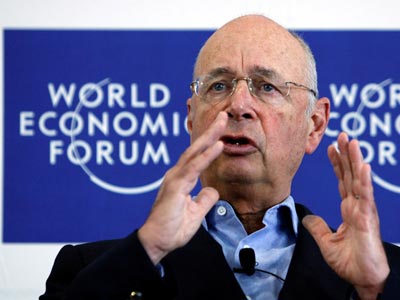
“Countries will need to start thinking of human capital very differently – including how they integrate women into leadership roles. This shift in mindset and practice is not a goal for the future, it is an imperative today,” said Klaus Schwab, Founder and Executive Chairman of the World Economic Forum.The eighth annual edition of the Report ranks 136 countries on their ability to close the gender gap in four key areas: economic participation and opportunity, political empowerment, health and survival, educational attainment, political participation and economic equality. Of the 133 countries that were measured in both 2012 and 2013, 86 actually improved their gender gap during this time. Overall, the Report finds Iceland the most advanced country in the world in terms of gender equality for the fifth year running. It, along with Finland (2nd), Norway (3rd) and Sweden (4th), has now closed over 80% of its gender gap. These countries are joined in the top 10 by the Philippines, which enters the top five for the first time, Ireland (6th), New Zealand (7th), Denmark (8th), Switzerland (9th) and Nicaragua (10th).
Elsewhere, in 14th place Germany is the highest-placed individual G20 economy, although it falls one place from 2012. Next is South Africa (17th, down one), the United Kingdom (level on 18th) and Canada (up one to 20th). The United States comes 23rd, also down one place since 2012. After South Africa, the next highest BRICS nation is Russia (61st), followed by Brazil (62nd), China (69th) and India (101st). At the bottom of the ranking are Chad (134th), Pakistan (135th) and Yemen (136th).

At the global level, the Report finds that in 2013, 96% of the health and survival gender gap has now been closed. It is the only one of the four pillars that has widened since the Report was first compiled in 2006. In terms of education, the global gender gap stands at 93%, with 25 countries having closed their gaps completely.

The gender gaps for economic equality and political participation are only 60% and 21% closed respectively, although progress is being made in these areas, with political participation narrowing by almost 2% over the last year. In both developing and developed countries alike, relative to the numbers of women in tertiary education and in the workforce overall, women’s presence in economic leadership positions is limited. To mobilize various stakeholders and to keep track of progress, it is important that there are quantitative benchmarks widely available.

Since 2006, through the Global Gender Gap Report series, the World Economic Forum has been quantifying the magnitude of gender- based disparities and tracking their progress over time. By providing a comprehensive framework for benchmarking global gender gaps, the Report identifies countries that are role models in dividing their resources equitably between women and men, regardless of the overall resource level.

Mishal Pakistan is the country partner institute of the Center for Global Competitiveness and Benchmarking Networks of the World Economic Forum. Established in 2003, Mishal has been engaged with key stakeholders in Pakistan to improve the state of competitiveness and media through good governance initiatives.  

Download the full report, covering 136 economies including rankings, video and an interactive map.

Wednesday, November 2, 2011

Competitiveness: Competitiveness Support Fund and World Economic Forum to develop a New Sustainable Competitiveness Framework in Pakistan

Competitiveness: Competitiveness Support Fund and World Economic Forum to develop a New Sustainable Competitiveness Framework in Pakistan

Competitiveness Support Fund and World Economic Forum to develop a New Sustainable Competitiveness Framework in Pakistan


CSF and World Economic Forum to develop a New Sustainable Competitiveness Framework in Pakistan


As the world marks 7 billion population count, Pakistan will become the 5th most populace country with 314 million people in 2050 from the current 177 million. Pakistan must prioritize its economic resource for a sustainable growth and economic development, Shahab Khawaja

To measure the impact of sustainability on economic competitiveness, the World Economic Forum and its partner organization in Pakistan, the Competitiveness Support Fund will be working together in developing a new analytical framework – the Sustainable Competitiveness Index (SCI). The SCI takes a long-term approach to highlight factors that could represent vulnerabilities to national competitiveness and productivity in the future.

The Competitiveness Support Fund (CSF) is a joint initiative of the Ministry of Finance, Government of Pakistan, and the U.S. Agency for International Development (USAID) established to reposition Pakistan’s Economy on global competitive footing.

Shahab Khawaja, Chief Executive Officer of CSF said, “through its flagship Global Competitiveness Report, World Economic Forum has over the course of the last three decades studied and measured the drivers of national competitiveness, including a wide range of factors such as governance, infrastructure, education, innovation and proper functioning of markets. To supplement this traditional analysis, the new index accounts for elements required to make competitiveness sustainable over the longer run, in economic, social and environmental terms”.

With this new methodology, Pakistan can actually lose 3 to 9 positions on its current position from 118 on the Global Competitiveness Index of the World Economic Forum, Shahab Khawaja added.

The recent events in the last few years have indicated that Pakistan needs to put more focus on its sustainable development efforts, according to analysts, the SCI is extremely important for Pakistan, as it will provide the Government of Pakistan an overview on its long-term sustainable development initiatives.

According to CSF, poor institutional water and disaster management capacity in Pakistan are key indicators which will be addressed by the SCI as its sub-indices focuses on the access to improved drinking water, forest cover change and water stress index.

The SCI maintains almost all of the elements already captured by the Forum’s existing competitiveness work, which are important for both short and longer term objectives, but it also integrates a number of additional concepts, including social cohesion, environmental policy, resources efficiency, management of renewable resources and environmental degradation.

With the goal of contributing to the discourse about the drivers of sustainable competitiveness, and also of encouraging feedback at this early stage that can serve as input for refining and further developing the concept, CSF in cooperation with WEF decided to release the preliminary results of this evolving work in the latest edition of the Global Competitiveness Report 2011.


The SCI currently covers 100 countries, and an analysis of how the results of the Index differs from those of the traditional competitiveness ranking provides a sense of which countries are not only competitive now, but are also preparing well for their future competitiveness.

Sustainable competitiveness is a nascent area of research, and the Forum’s initial work has shown that much of the data measuring the key concepts is not yet available. It will take a multi-year effort to properly capture the concept of sustainable competitiveness through reliable indicators that can be gathered for a large number of countries.

To ensure that this issue is approached in a comprehensive way, the World Economic Forum has created a high-level Advisory Board on Sustainability and Competitiveness to provide guidance and input into the process. The Advisory Board members are drawn from the Forum’s Network of Global Agenda Councils, representing leaders from government, business, academia and civil society.


The Competitiveness Support Fund is the partner institute in Pakistan for the Global Competitiveness Network of the World Economic Forum. As the partner institute, CSF conducts the World Economic Forum Executive Opinion Survey in Pakistan, a survey implemented globally in over 142 countries worldwide. The results of the Executive Opinion Survey are presented each year in the World Economic Forum’s Global Competitiveness Report.

To promote competitiveness in Pakistan, CSF disseminates the results of the Global Competitiveness Report and the rankings of Pakistan in order to identify areas where competitiveness can be improved. It also encourages dialogue and debate on competitiveness on Pakistan’s business, government and academic forums.

Wednesday, September 15, 2010

Mishal launches gender empowerment Fellowship program with LadiesFund

At the launch of the Ladiesfund and Mishal Fellowship Program:  (L to R) Sameera Raja - Canvas Art Gallery, Gordon James Brown Avari Hotels, Puruesh Chaudhary - Director Content Mishal Pakistan, Tara Uzra Dawood - CEO DCM Ltd./Manager of LadiesFund and Nilofer Saeed - Hobnob, Neecos, Copper Kettle


Mishal announced today that in partnership with LADIESFUND it will award the Rs. 100,000 Fellowship in March 2011.  This initiative marks the 7th anniversary of Mishal’s operations in the country, the organization aims at creating sustainable social value dividends in Pakistan.


“Pakistan has shown significant progress on the political empowerment of the women on the Global Gender Gap Index of the World Economic Forum, it is time that we also empower our women on economic opportunities, health and education” said Puruesh Chaudhary, Director Content, Mishal Pakistan.

LADIESFUND was launched with an aim to facilitating female financial security through investments and acts as a forum for women globally to network and promote entrepreneurship.  LADIESFUND was established in 2007 by Dawood Capital Management Limited as an advisory service and asset management division for women clients. 

On the launch of the LadiesFund Entrepreneurship Conference, Amir Jahangir, CEO Mishal (Pvt) Ltd. said that, “Mishal plans to expand this relationship with the LADIESFUND, through a progressive approach to create gender parity by creating a shift from an information economy to a knowledge-based economy; empowering the females through technological breakthroughs and innovation; and supporting an innovation ecosystem which fosters entrepreneurship by putting women empowerment at the center of the strategy.”

LADIESFUND announced its fellowship and scholarship programs, which aim to identify and tap in to the high potential of this unexplored segment at the grass root level by conducting nationwide searches. Addressing the participants and the section of the press, Tara Uzra Dawood, CEO Dawood Capital Management Limited, said “women from different backgrounds are choosing their own ways to contribute to the economy which is becoming more and more critical in closing the gender gaps within our society.” 


Mishal’s collaboration with LADIESFUND will help in identifying gaps in policies and would be suggesting solutions and set of policy guidelines for the stakeholders for gender parity on the principles of the Global Gender Gap Index of the World Economic Forum, Puruesh Chaudhary briefed the participants.

Globally gender gaps are being recognized as gaps of equity and gaps of efficiency.  Investing in women and reaping the returns are the fundamental cornerstones of economic growth. According to World Economic Forums' latest report on Global Competitiveness Index, Pakistan stands at 137 among 139 nations in female participation in labour force. Through this initiative, Mishal pledges to focus on economic participation and opportunity and educational attainment to promote gender parity.

Mishal, launched in 2003 by Amir Jahangir, who has been honoured as a Young Global Leader by the World Economic Forum, has been engaged with some of the most dynamic organizations in the region to develop their communication strategy and solutions for better understand and creating synergies between different entities.

Mishal has been at the forefront of communications solutions and is actively pursuing to improve the state of media and journalism in Pakistan.

The team behind Mishal has been developing, creating and managing media entities and content for the last 20 years at various platforms. Taking this initiative to the next level Mishal has been actively pursuing to build the capacity of the media in creating better understanding the issues in global perspective.

Mishal has undertaken the task to build a workforce which can be the building block of a knowledge-based economy. Mishal through various initiatives is creating the capacity of various segments of the society including female workforce, capacity of the Press Clubs and Associations in Pakistan by creating a knowledge-sharing learning platform for the media and journalists across Pakistan. The initiative will build the capacity through interactive workshops, conferences, collaborative thinking and media, journalism and gender awards for the professionals in the field of journalism and media.